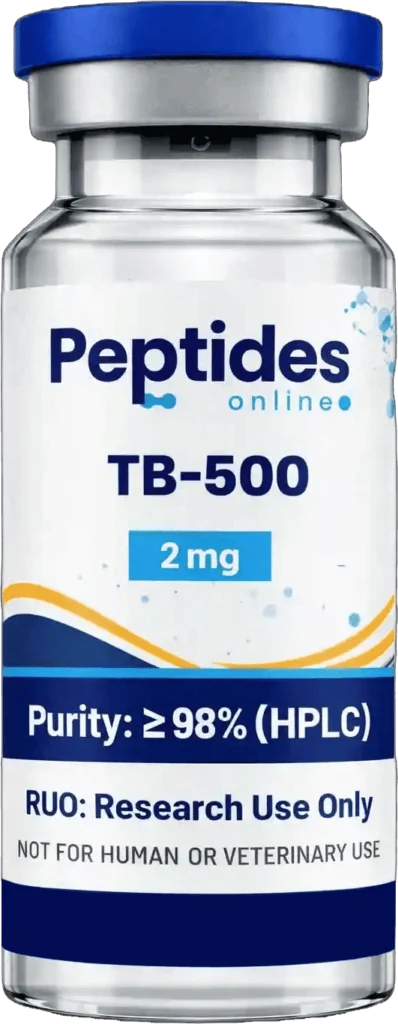
TB-500
The TB-500 is a man-made replica of the Thymosin Beta-4 which is naturally produced by the thymus. It is extensively researched for its ability to regulate cytoskeletal organization and actin binding. Strictly for laboratory applications.
About TB-500
The TB-500 is an artificial form of a naturally produced 43-amino acid peptide Thymosin Beta-4 (Tβ4), which is produced in high concentrations in blood platelets, wound fluid, and many different cells. This peptide is involved in actin sequestration and cytoskeletal organization.
In the case of the TB-500 research, one of the issues being studied was actin binding by this peptide. Other areas of research included its impact on cell migration and proliferation, as well as angiogenesis.
Research Areas
- Cytoskeletal organisation and actin-binding mechanism research
- Cellular migration and proliferation in in-vitro laboratory settings
- Angiogenesis and vascular biology model investigations
- Wound healing pathway studies in controlled environments
- Anti-inflammatory response research in laboratory models
- Cardiac and endothelial cell behaviour investigations
⚠ Research Use Only.
All products supplied by PeptidesX are intended strictly for in-vitro laboratory and scientific research. Not for human consumption, medical use, veterinary use, or therapeutic application. Researchers are responsible for compliance with all applicable regulations in their jurisdiction.
Identity & Purity
HPLC / MS-UPLC| Test | Specification | Result |
| Appearance | White lyophilised powder | ✓ Conforms |
| HPLC Purity | ≥ 98.0% | 99.0% ✓ |
| MS Molecular Weight | Expected ± 0.5 Da | Confirmed ✓ |
| Amino Acid Analysis | Theoretical sequence | Confirmed ✓ |
| Water Content (KF) | ≤ 8.0% | 5.4% ✓ |
| Net Peptide Content | ≥ 85.0% | 90.8% ✓ |
Safety Testing
Endotoxin / Metals| Test | Specification | Result |
| Endotoxin (LAL) | ≤ 5 EU/mg | 0.9 EU/mg ✓ |
| Bioburden | ≤ 100 CFU/g | <10 CFU/g ✓ |
| Lead (Pb) | ≤ 10 ppm | <0.1 ppm ✓ |
| Arsenic (As) | ≤ 5 ppm | <0.1 ppm ✓ |
| Mercury (Hg) | ≤ 3 ppm | <0.1 ppm ✓ |
| Cadmium (Cd) | ≤ 5 ppm | <0.1 ppm ✓ |
Solubility: Water / PBS. Mix gently by rolling — do not vortex.
Returns: Sealed, unopened vials may be returned within 14 days of receipt. Opened vials cannot be returned.
TB-500 is a synthetic peptide derived from a naturally occurring protein called Thymosin Beta-4 (TB4). It is widely researched for its potential role in tissue repair, cellular migration, recovery processes, and regenerative biology.
TB-500 is commonly referred to as Thymosin Beta-4 Fragment, TB500 Peptide, or simply TB-500 within research communities. It is a synthetic version designed for laboratory investigation.
TB-500 has attracted significant scientific interest because of its association with cell migration, tissue regeneration, wound healing, and recovery-related biological pathways. It remains one of the most widely studied peptides in regenerative research.
Researchers believe TB-500 may influence actin regulation, cellular movement, tissue remodelling, and repair mechanisms. Studies continue to investigate how these pathways contribute to recovery and regeneration processes.
Current research areas include:
. Tissue repair studies
. Muscle recovery research
. Tendon and ligament investigations
. Wound healing research
. Cellular migration studies
. Regenerative medicine research
. Connective tissue biology
. Recovery and rehabilitation science
Published research has investigated TB-500's role in tissue repair, cellular regeneration, angiogenesis, and recovery pathways. Scientists continue to study its biological effects across a range of laboratory models.
Yes. Tendon and ligament research represents one of the most common scientific applications of TB-500. Researchers continue to investigate how it may influence connective tissue repair and remodelling processes.
Muscle biology and recovery remain major areas of interest. Scientists study TB-500's relationship with tissue regeneration, recovery pathways, and post-exercise repair mechanisms.
Thymosin Beta-4 is a naturally occurring protein found throughout the body, whereas TB-500 is a synthetic peptide fragment commonly used in laboratory research. Both are studied for their association with regenerative and recovery-related pathways.
Research-grade TB-500 is available through specialist peptide suppliers serving the UK research community. Availability may vary depending on supplier inventory and batch production schedules.
Researchers should purchase TB-500 from reputable suppliers that provide batch-specific Certificates of Analysis, purity testing results, and transparent quality assurance standards.
Yes. Research-grade TB-500 is available from selected online peptide suppliers. Researchers should review purity testing, analytical verification, and supplier reputation before purchasing.
TB-500 is commonly supplied as a lyophilised peptide powder in multiple vial strengths. Available concentrations vary depending on supplier offerings and research requirements.
Premium research-grade TB-500 is typically tested using HPLC and mass spectrometry. Batch-specific purity information is usually available through a Certificate of Analysis.
TB-500 is commonly supplied as a lyophilised peptide powder and is reconstituted using appropriate laboratory-grade diluents. Researchers should follow established laboratory protocols and handling procedures.
Lyophilised TB-500 should be stored according to the supplier's storage recommendations. Proper storage helps maintain peptide stability and research integrity.
Yes. A batch-specific Certificate of Analysis provides important information regarding peptide identity, purity, and analytical testing used during quality control.
Researchers should look for:
. Batch-specific Certificates of Analysis
. HPLC purity verification
. Mass spectrometry testing
. Transparent quality control procedures
. Reliable UK shipping
. Consistent stock availability
TB-500 remains one of the most recognised peptides in recovery and regenerative research because of its association with tissue repair, cellular migration, and healing-related biological pathways. Its broad research profile continues to generate significant scientific interest worldwide.