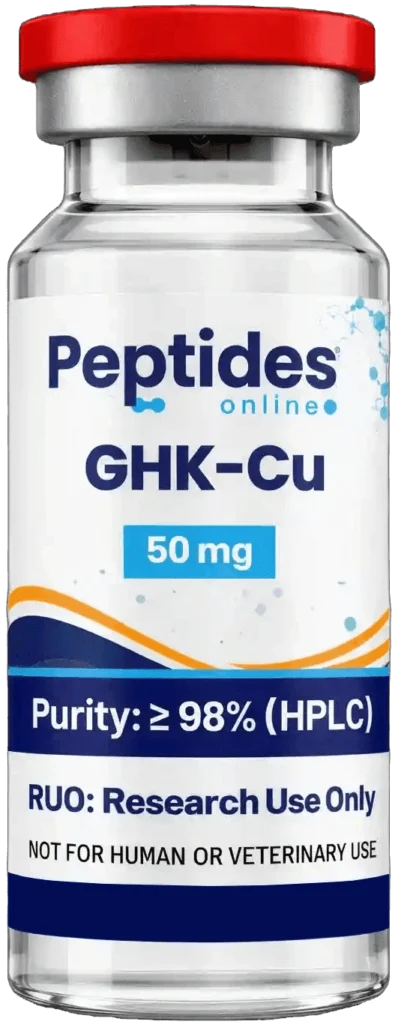
GHK-Cu
GHK-Cu is a natural copper peptide that occurs in human plasma. It has been widely investigated in cellular biology, structural biology, and wound healing processes in controlled laboratory conditions.
About GHK-Cu
GHK-Cu is a tripeptide-copper compound formed from glycine, histidine, and lysine, bound with copper ions (Cu²⁺). The natural occurrence of GHK-Cu in human plasma occurs in reduced levels as one ages, rendering the compound highly researched in cellular biology studies.
GHK-Cu has been highly studied because of its ability to stimulate collagen synthesis, antioxidative enzymes activation, and regulation of gene expressions in vitro experiments. The peptide is one of the most documented compounds in the field of structural and cellular biology.
Research Areas
- Collagen and glycosaminoglycan synthesis studies in fibroblast cultures
- Antioxidant enzyme (SOD, catalase) upregulation research
- Gene expression modulation and DNA repair pathway investigation
- Wound healing and tissue remodelling mechanism research
- Anti-inflammatory cytokine pathway laboratory studies
- Angiogenesis and nerve growth factor research in vitro
⚠ Research Use Only.
All products supplied by PeptidesX are intended strictly for in-vitro laboratory and scientific research. Not for human consumption, medical use, veterinary use, or therapeutic application. Researchers are responsible for compliance with all applicable regulations in their jurisdiction.
Identity & Purity
HPLC / MS-UPLC| Test | Specification | Result |
| Appearance | White lyophilised powder | ✓ Conforms |
| HPLC Purity | ≥ 98.0% | 99.6% ✓ |
| MS Molecular Weight | Expected ± 0.5 Da | Confirmed ✓ |
| Amino Acid Analysis | Theoretical sequence | Confirmed ✓ |
| Water Content (KF) | ≤ 8.0% | 5.4% ✓ |
| Net Peptide Content | ≥ 85.0% | 90.8% ✓ |
Safety Testing
Endotoxin / Metals| Test | Specification | Result |
| Endotoxin (LAL) | ≤ 5 EU/mg | 0.9 EU/mg ✓ |
| Bioburden | ≤ 100 CFU/g | <10 CFU/g ✓ |
| Lead (Pb) | ≤ 10 ppm | <0.1 ppm ✓ |
| Arsenic (As) | ≤ 5 ppm | <0.1 ppm ✓ |
| Mercury (Hg) | ≤ 3 ppm | <0.1 ppm ✓ |
| Cadmium (Cd) | ≤ 5 ppm | <0.1 ppm ✓ |
Solubility: Water. Mix gently by rolling — do not vortex.
Returns: Sealed, unopened vials may be returned within 14 days of receipt. Opened vials cannot be returned.
GHK-Cu (Copper Tripeptide-1) is a naturally occurring copper-binding peptide first identified in human plasma. It has become one of the most extensively researched peptides in studies involving skin biology, hair follicle research, tissue regeneration, and cellular repair mechanisms.
GHK-Cu is composed of the amino acids Glycine-Histidine-Lysine bound to a copper ion (Cu). This naturally occurring complex is known as Copper Tripeptide-1 within scientific literature.
Few peptides have generated as much scientific interest as GHK-Cu. Researchers have investigated its potential role in wound healing, extracellular matrix remodelling, collagen production, skin appearance, hair follicle activity, inflammation signalling, and gene expression.
Current areas of GHK-Cu research include:
. Skin regeneration studies
. Hair growth research
. Collagen synthesis investigations
. Tissue repair mechanisms
. Wound healing research
. Anti-ageing and longevity studies
. Cellular signalling pathways
. Copper transport biology
Published studies have explored GHK-Cu's ability to influence thousands of genes associated with tissue repair, inflammation control, antioxidant activity, and cellular regeneration. It remains one of the most widely published peptides in regenerative research.
Yes. GHK-Cu has become particularly well known for skin-related research. Scientists investigate its effects on collagen production, elastin formation, extracellular matrix proteins, and overall skin regeneration pathways.
Hair follicle biology is another major area of interest. Researchers continue to study GHK-Cu's potential interactions with hair growth cycles, follicle health, and scalp-related biological processes.
Researchers believe GHK-Cu acts as a signalling peptide that helps regulate cellular repair processes. It may influence gene expression, tissue remodelling pathways, growth factors, and copper-dependent biological functions throughout the body.
Yes. GHK-Cu occurs naturally in human plasma, saliva, and urine. Levels tend to decline with age, making it a significant subject of ageing and regenerative medicine research.
Research-grade GHK-Cu is available from specialist peptide suppliers serving the UK research community. Availability may vary depending on product format and supplier inventory.
Researchers should buy GHK-Cu only from reputable suppliers that provide batch-specific Certificates of Analysis, purity testing results, and transparent quality control standards.
Yes. Research-grade GHK-Cu may be purchased from selected peptide suppliers online. Researchers should review analytical testing data, supplier reputation, and quality assurance procedures before ordering.
Premium research-grade GHK-Cu is typically verified through HPLC and mass spectrometry testing. Batch-specific purity results are usually provided through a Certificate of Analysis.
GHK-Cu is commonly supplied as a lyophilised peptide powder and is reconstituted using suitable laboratory-grade diluents. Researchers should follow established laboratory handling and storage procedures.
Lyophilised GHK-Cu should be stored according to the supplier's recommendations. Appropriate storage conditions help maintain peptide stability and analytical integrity during research.
Unlike many newer peptides, GHK-Cu has accumulated decades of published scientific literature. Its broad research profile across skin biology, tissue repair, ageing science, and hair follicle studies continues to make it one of the most respected peptides in regenerative research.
Look for suppliers that provide:
. Batch-specific Certificates of Analysis
. HPLC purity verification
. Mass spectrometry testing
. Transparent manufacturing standards
. Independent quality control documentation
. Reliable UK shipping and customer support
Research-grade GHK-Cu is most commonly supplied as a lyophilised peptide powder in sterile vials for laboratory and in-vitro research applications.