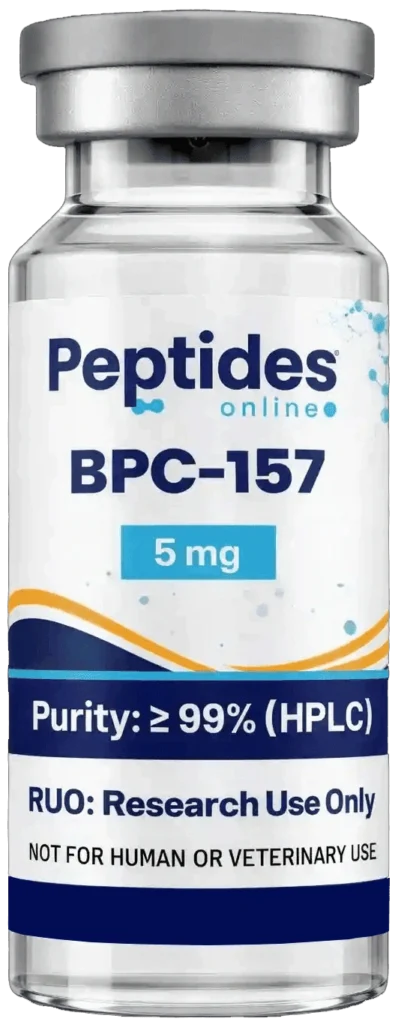
BPC-157
BPC-157 (Body Protection Compound-157) is a laboratory-made peptide that comes from a protein contained in the body’s stomach protection fluid. Provided as a lyophilized powder form in sterilized vials. For experimental purposes only.
About BPC-157
BPC-157 is an artificially made peptide that consists of 15 amino acids. This substance was first discovered as a natural protein fraction present in the gastric juice of humans and animals, and now it became one of the best studied peptides in the sphere of pre-clinical scientific research. The high stability and wide biological activity of BPC-157 were found during laboratory and experimental investigations and caused a lot of interest in this substance within many branches of biomedical research.
The potential application of BPC-157 was considered within the processes associated with connective tissue biology, angiogenesis, gastrointestinal physiology, cell signaling, and tissue repair processes. The interaction of this compound with growth factors and molecular mechanism of healing was studied during laboratory investigations, which caused many scientists’ interests. However, more investigations are necessary for the complete comprehension of the biological properties of this substance.
The product provides high-purity lyophilised BPC-157 only for the purpose of scientific and laboratory investigations.
Research Areas
- Cellular proliferation and migration studies in controlled laboratory environments
- Nitric oxide (NO) system interaction research and signalling pathway investigation
- Angiogenesis modelling and vascular biology research applications
- Tendon and ligament fibroblast studies in in-vitro settings
- Gastrointestinal mucosa research in controlled animal model environments
- Neurotrophic factor and dopaminergic system laboratory investigations
⚠ Research Use Only.
All products supplied by PeptidesX are intended strictly for in-vitro laboratory and scientific research. Not for human consumption, medical use, veterinary use, or therapeutic application. Researchers are responsible for compliance with all applicable regulations in their jurisdiction.
Identity & Purity
HPLC / MS-UPLC| Test | Specification | Result |
| Appearance | White lyophilised powder | ✓ Conforms |
| HPLC Purity | ≥ 98.0% | 99.2% ✓ |
| MS Molecular Weight | Expected ± 0.5 Da | Confirmed ✓ |
| Amino Acid Analysis | Theoretical sequence | Confirmed ✓ |
| Water Content (KF) | ≤ 8.0% | 5.4% ✓ |
| Net Peptide Content | ≥ 85.0% | 90.8% ✓ |
Safety Testing
Endotoxin / Metals| Test | Specification | Result |
| Endotoxin (LAL) | ≤ 5 EU/mg | 0.9 EU/mg ✓ |
| Bioburden | ≤ 100 CFU/g | <10 CFU/g ✓ |
| Lead (Pb) | ≤ 10 ppm | <0.1 ppm ✓ |
| Arsenic (As) | ≤ 5 ppm | <0.1 ppm ✓ |
| Mercury (Hg) | ≤ 3 ppm | <0.1 ppm ✓ |
| Cadmium (Cd) | ≤ 5 ppm | <0.1 ppm ✓ |
Solubility: Water / Acetic acid. Mix gently by rolling — do not vortex.
Returns: Sealed, unopened vials may be returned within 14 days of receipt. Opened vials cannot be returned.
BPC-157, short for Body Protection Compound 157, is a synthetic peptide derived from a naturally occurring protein found in the human gastric system. It has become a widely researched peptide in studies involving tissue repair, recovery, and regenerative processes.
BPC-157 is commonly referred to as Body Protection Compound 157, BPC 157 Peptide, or simply BPC-157. These names all refer to the same research peptide.
Researchers believe BPC-157 may interact with pathways involved in tissue repair, angiogenesis, cellular signalling, and recovery processes. Its precise mechanisms continue to be investigated through ongoing laboratory studies.
Current research areas include:
. Tendon and ligament research
. Muscle recovery studies
. Gastrointestinal research
. Tissue regeneration
. Angiogenesis research
. Cellular repair mechanisms
Preclinical studies have investigated BPC-157 for its potential role in tissue healing, recovery, and regenerative processes. Researchers continue to explore its biological activity and potential applications in laboratory settings.
Yes. BPC-157 is one of the most commonly studied peptides in recovery-focused research. Scientists investigate its potential effects on connective tissues, muscles, and healing-related biological pathways.
Research-grade BPC-157 is available through specialist peptide suppliers serving the UK research community. Availability may vary depending on supplier inventory and product formats.
Researchers should purchase BPC-157 from reputable suppliers that provide batch-specific Certificates of Analysis, purity testing data, and transparent quality control standards.
Yes, research-grade BPC-157 is available from selected UK peptide suppliers. Before purchasing, researchers should review purity testing, quality assurance procedures, and supplier documentation.
BPC-157 is commonly available in multiple vial strengths, including 5mg and 10mg formats, although available strengths may vary between suppliers.
High-quality research-grade BPC-157 is typically tested using analytical methods such as HPLC and mass spectrometry. Purity information is usually provided through a batch-specific Certificate of Analysis.
BPC-157 is commonly supplied as a lyophilised peptide powder and is reconstituted in laboratory environments using suitable research-grade diluents. Researchers should follow established laboratory protocols.
Lyophilised BPC-157 should be stored according to the supplier's recommendations. After reconstitution, researchers should maintain appropriate storage conditions to help preserve peptide stability.
Yes. A batch-specific Certificate of Analysis provides important information regarding peptide identity, purity, and analytical testing methods used during quality control.
When selecting a supplier, researchers should consider:
. Batch-specific CoAs
. HPLC purity testing
. Mass spectrometry verification
. Transparent quality assurance processes
. Reliable customer support
. Consistent stock availability
BPC-157 has attracted significant scientific interest due to its potential involvement in tissue repair, recovery pathways, and regenerative research. Its broad range of ongoing studies makes it one of the most recognised peptides in the research community.
Research-grade BPC-157 is most commonly supplied as a lyophilised peptide powder in sterile vials. Product formats may vary depending on the supplier and intended research application.