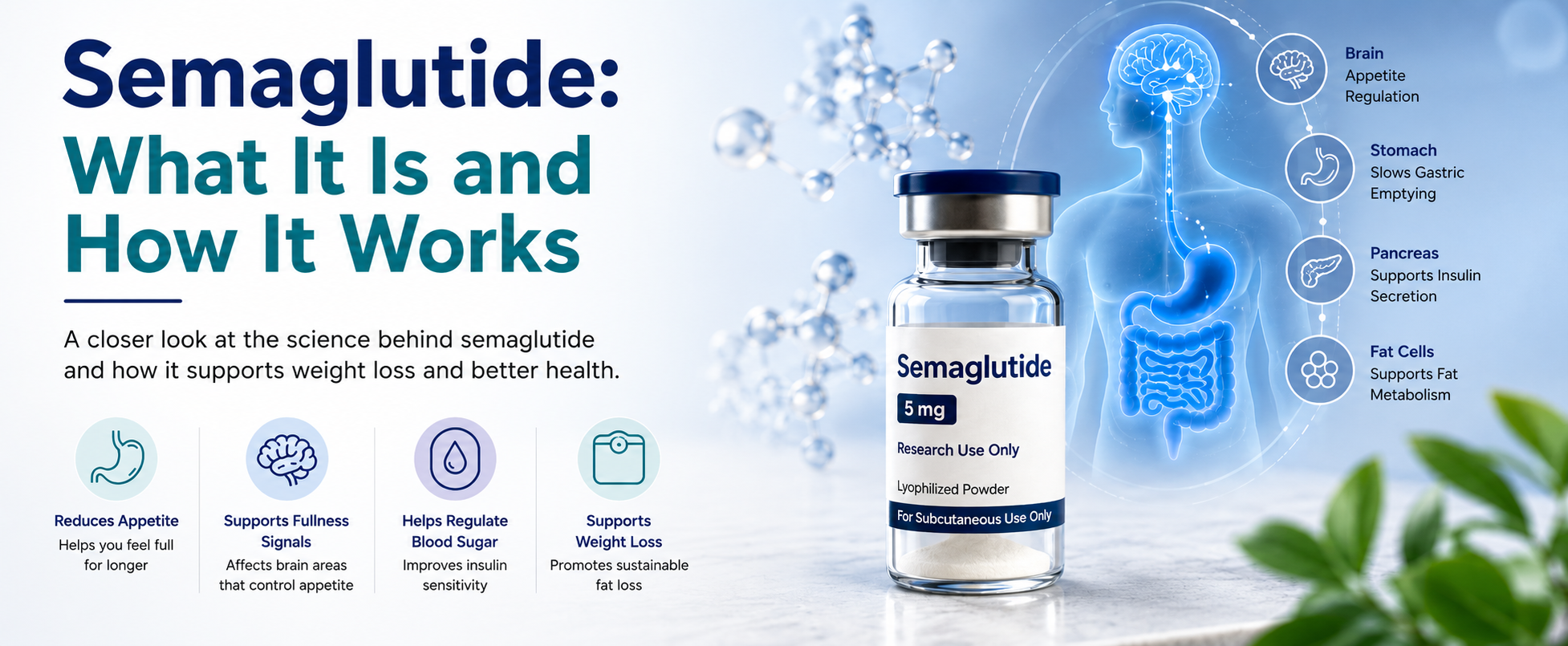
Semaglutide is an MHRA-approved medicine that has gained considerable recognition due to its application in the treatment of type 2 diabetes and obesity. Semaglutide is sold under several brand names such as Ozempic, Wegovy, and Rybelsus and is one of the GLP-1 receptor agonists. This knowledge is necessary in order to comprehend the media headlines about this drug.
The science behind it
Semaglutide is a medicine that imitates a hormone found naturally in the body. This hormone goes by the name glucagon-like peptide-1 (GLP-1).
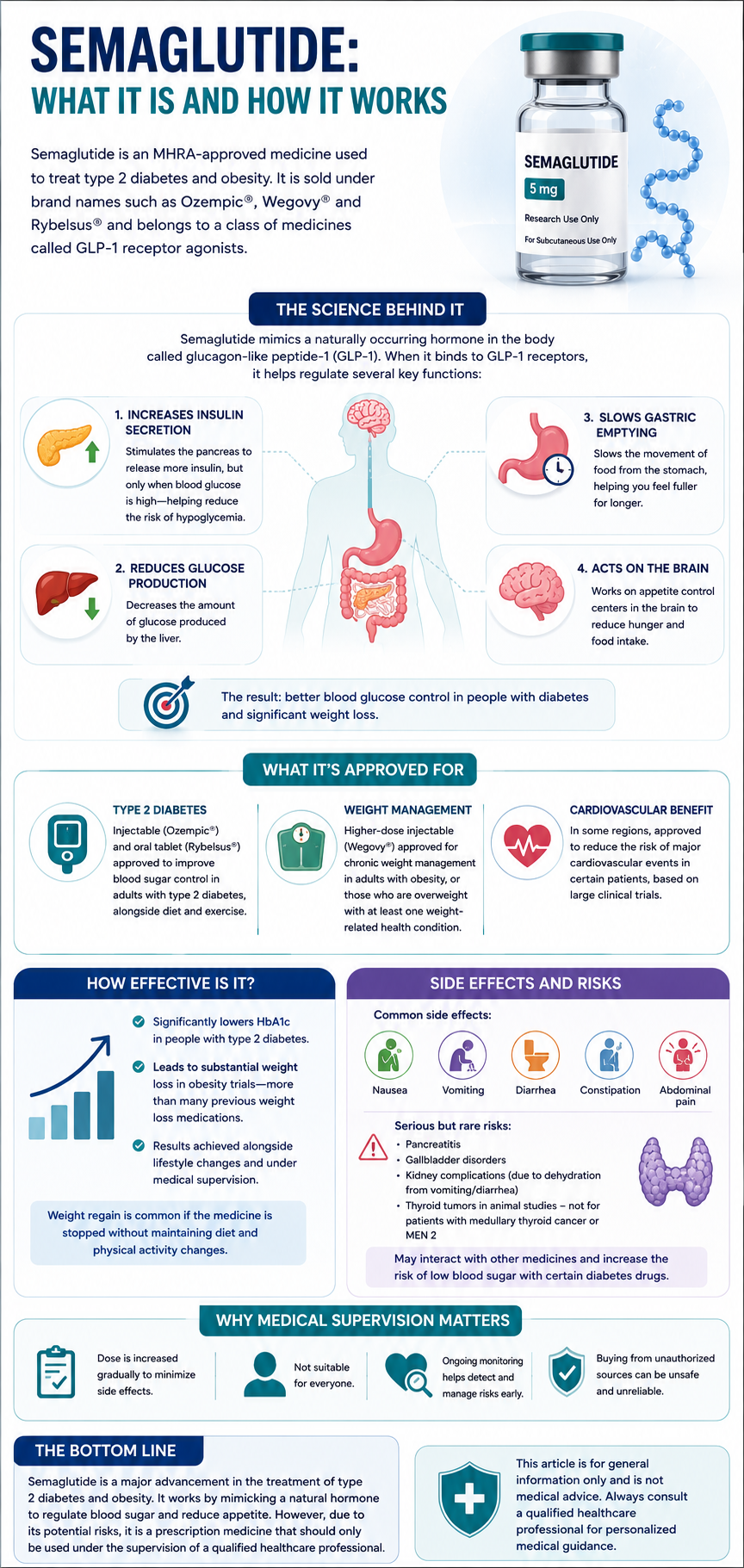
Once Semaglutide interacts with the GLP-1 receptors, it achieves several things. First, it triggers the pancreas to produce more insulin, but only in situations where the blood glucose levels are high. In such a manner, it avoids the danger of hypoglycemia. Secondly, it cuts down the production of glucose in the liver. Thirdly, it slows down the process of emptying the stomach contents; hence, people stay full for longer periods. Lastly, it works in the centers responsible for appetite in the brain.
The result of these processes is effective regulation of blood glucose levels in individuals suffering from diabetes and subsequent weight loss.
What it’s approved for
Regulators have approved semaglutide for specific uses, and these differ by brand and formulation:
- Type 2 diabetes:The injectable form (Ozempic) and an oral tablet form (Rybelsus) are approved to improve blood sugar control in adults with type 2 diabetes, usually alongside diet and exercise.
- Weight management:A higher-dose injectable form (Wegovy) is approved for chronic weight management in adults with obesity, or those who are overweight with at least one weight-related health condition.
In some regions, semaglutide has also been approved to reduce the risk of major cardiovascular events in certain patients, based on large clinical trials.
How effective is it
There have been significant results from clinical trials. In the studies on diabetes, semaglutide significantly reduced the levels of HbA1C (blood glucose control level). In the obesity trials for Wegovy, the patients experienced a significantly large percentage of body weight loss in the period of the trial – much higher than any other weight loss drugs in the past.
One should take into consideration the fact that these results were obtained with the help of life-style changes and under medical supervision. Weight gain is quite common when one stops taking this drug without making any changes to his diet and physical activity.
Side effects and risks
Semaglutide peptide is an effective medicine that, however, has its side effects. Among the common ones are nausea, vomiting, diarrhea, constipation, and abdominal pain. These side effects are most severe at the beginning of treatment and upon the dose increase. The following are some more serious yet rare side effects, which make semaglutide available by prescription only.
In particular, the drug can cause pancreatitis and gallbladder disorders as well as some complications affecting kidneys as a result of dehydration caused by vomiting and/or diarrhea. In clinical trials, the drugs were connected to thyroid tumors in animals; therefore, there are special precautions concerning patients having or having had medullary thyroid cancer or the multiple endocrine neoplasia syndrome type 2.
Also, because semaglutide affects the absorption of other medicines and has interaction with certain diabetes medicines resulting in hypoglycemia, it should be prescribed and controlled by a healthcare provider familiar with the patient’s history.
Why medical supervision matters
The advantages of semaglutide are evident, but it is not an ordinary purchase. The correct dosage is found out gradually so that the side effects can be minimized, it is not suitable for everybody, and continued surveillance detects any problem at the initial stages. It is due to the same reason that the regulatory authorities view it as a grave matter of concern when the product is purchased from an unauthorized source.
The bottom line
Semaglutide is one medicine that marks true progress in the management of type 2 diabetes and obesity. The drug functions through the mimicry of a naturally occurring hormone to regulate the levels of blood glucose as well as reducing appetite. However, there are genuine risks associated with semaglutide, which makes it a drug meant for use under the supervision of a physician.
This article is for general information only and is not medical advice. Anyone considering treatment for diabetes or weight management should speak to a qualified healthcare professional.
Products supplied by PeptidesX are intended for laboratory research purposes only. They are not intended for human consumption, medical use, diagnosis, treatment, or prevention of any disease.